Building a typical commercial concrete parking lot takes about two to four weeks of site work once permits and design are done, and then the new pavement needs about a week before cars can use it. Heavy trucks wait longer, often until the concrete reaches its design strength around 28 days. Larger lots are built in phases, so parts of the site can stay open while the rest is paved.
The timeline, step by step
| Stage | Typical time | What happens |
|---|---|---|
| Design and permits | Varies by city | Pavement section, drainage, layout and approvals |
| Demolition and grading | A few days to two weeks | Old pavement removed, site cut and filled to grade |
| Subgrade and base | A few days | Soil compacted and proof rolled, aggregate base placed and compacted |
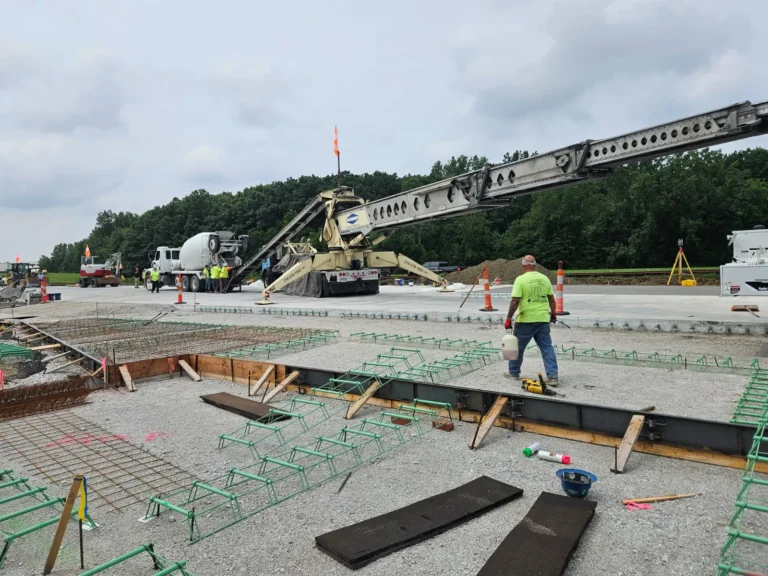
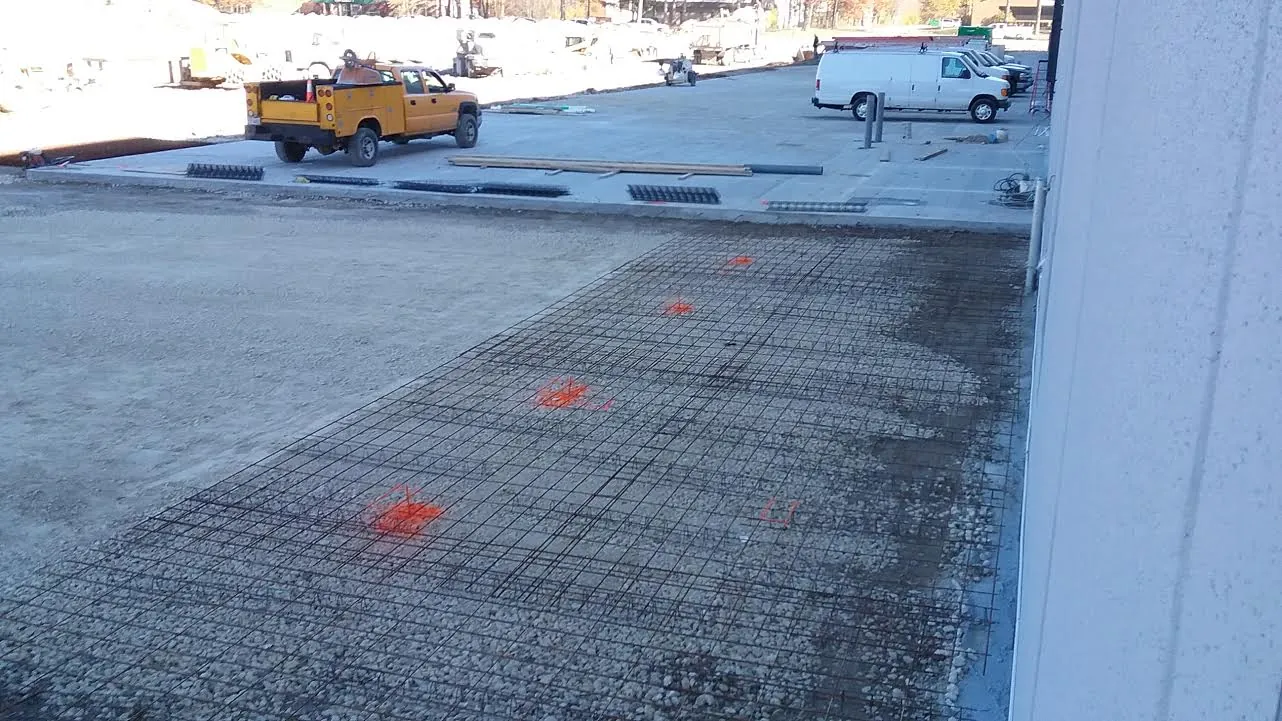
| Forms and steel | A few days | Edge forms, dowels and any reinforcing set |
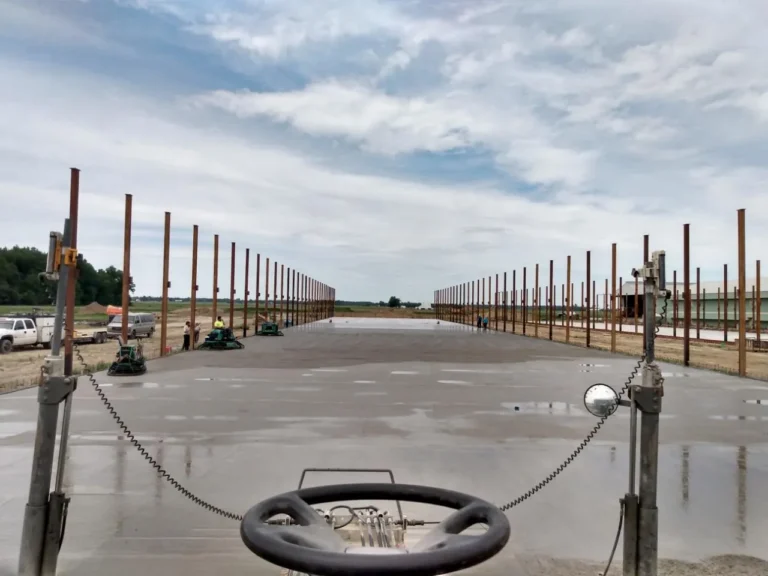
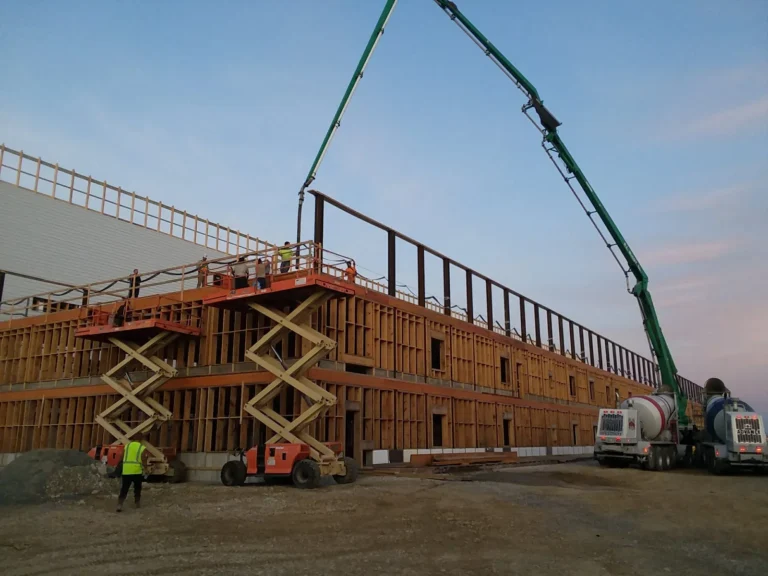
| Pouring | One or more days | Concrete placed, finished and textured section by section |
| Joint sawing | Same day or night | Joints cut before the slab cracks on its own |
| Curing | About 7 days | Curing compound or covers keep moisture in |
| Striping and opening | After curing | Lines painted, then the lot opens to traffic |
When can you drive on a new concrete parking lot?
- Foot traffic: usually after 24 to 48 hours.
- Cars and light trucks: usually after about 7 days.
- Heavy trucks and equipment: usually after 28 days, or once strength tests show the concrete has reached what the engineer requires.
Cold weather slows strength gain, so these times stretch in late fall and early spring. Our post on how long concrete takes to cure explains why.
What slows a project down
- Weather. Rain on the subgrade, freezing nights and very hot, windy days all change the schedule. Ohio’s main paving season runs from spring into late fall; see when construction season runs in Ohio.
- Soft ground. Subgrade that fails the proof roll has to be dug out and replaced before paving.
- Utilities and drainage. New inlets, storm lines and light pole bases go in before the base is finished.
- Inspections and testing. Base compaction and concrete testing are scheduled with the inspector.
Keeping a business open during paving
Most commercial lots are paved in phases. The site is split into sections with temporary access, each section is poured and cured, and traffic shifts as sections open. Planning the phases around deliveries and customer access at the start keeps the disruption short.
Ready to schedule?
We build commercial concrete parking lots, truck courts and dock aprons across Ohio, Indiana, Michigan, West Virginia and Pennsylvania. For design questions see how thick a concrete parking lot should be. Send your site plan and an estimator will reply within 24 hours. The American Concrete Pavement Association has more on how concrete pavement is built.