To choose a concrete contractor in Ohio, check five things before price: whether they self-perform the work or broker it, whether they have done jobs like yours at a similar size, their safety record and insurance, how complete their bid is, and how they communicate before you award the job. The lowest number on bid day often turns into change orders, schedule slips or a floor that has to be ground and patched. A contractor who is strong on all five is usually the cheaper one by the end of the project.
1. Who actually does the work
Ask what the contractor self-performs and what they sub out. Some concrete companies hold the contract and hire crews job by job. That can work, but it puts a layer between you and the people placing your concrete, and the crew on your site may never have worked together. A contractor with its own crews, its own equipment and crew leaders who stay with the company controls the schedule and the quality directly.
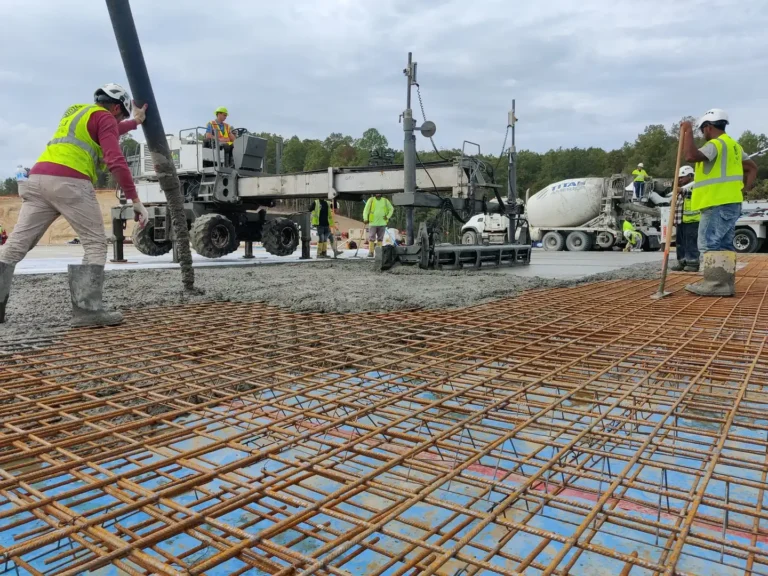
Ask about equipment too. A contractor who owns its pumps, screeds and finishing equipment is not waiting on a rental yard when the weather window opens.
2. Experience with your kind of job
A crew that pours driveways all week is not set up for a 100,000 square foot warehouse slab, and the reverse is true as well. Ask for projects of a similar type and size, the specs they were built to, and who you can call about them. For floors with a flatness requirement, ask what FF and FL numbers they have achieved and whether they can show test results.
3. Safety record and insurance
Safety is where a poor sub costs a general contractor the most. Ask for:
- The experience modification rate (EMR). It compares the company’s workers’ compensation claims to the industry average of 1.0. Lower is better.
- Training. Whether crew leaders hold OSHA 30 training and whether there is a written safety program, a site-specific plan and regular toolbox talks.
- Insurance. A certificate of insurance naming the right parties, with general liability, workers’ compensation and umbrella limits that meet your contract.
- Licensing and registration. Requirements differ by state and by city, so ask how they are registered for your jurisdiction and confirm it before award.
4. A complete, clear bid
Two bids for the same slab can include very different work. Compare them line by line:
- Subgrade and base work, or only the concrete above it
- Vapor retarder, reinforcing, dowels and embeds
- Joint sawing, joint filling and when the filling happens
- Curing method and how long
- Flatness testing and closeout documentation
- Winter protection, pumping and what happens on weather days
A contractor who asks for the full drawing set, questions details that will cause trouble in the field and lists exclusions plainly is showing you how they will run the job.
5. How they communicate
Pay attention to how fast the estimator responds, whether you get a straight answer about their schedule and capacity, and whether they tell you when a job is not a good fit. A contractor who is hard to reach during bidding rarely gets easier after award.
Signs a contractor knows what they are doing
- They talk about the subgrade, the joints and the curing, not only the concrete.
- They ask for the racking layout or traffic loads before pricing a floor.
- Their references are general contractors and owners who would hire them again.
- They can explain why a slab cracks and how the joint layout controls it.
- They put warranty terms and exclusions in writing. Our post on whether concrete contractors guarantee their work covers what to look for.
Red flags
- A price far below the others with no explanation of what is excluded
- No certificate of insurance until after award
- Vague answers about who the crew is
- Pressure to start before the base and forms are ready
- No experience at the size or spec of your project
How we answer these questions
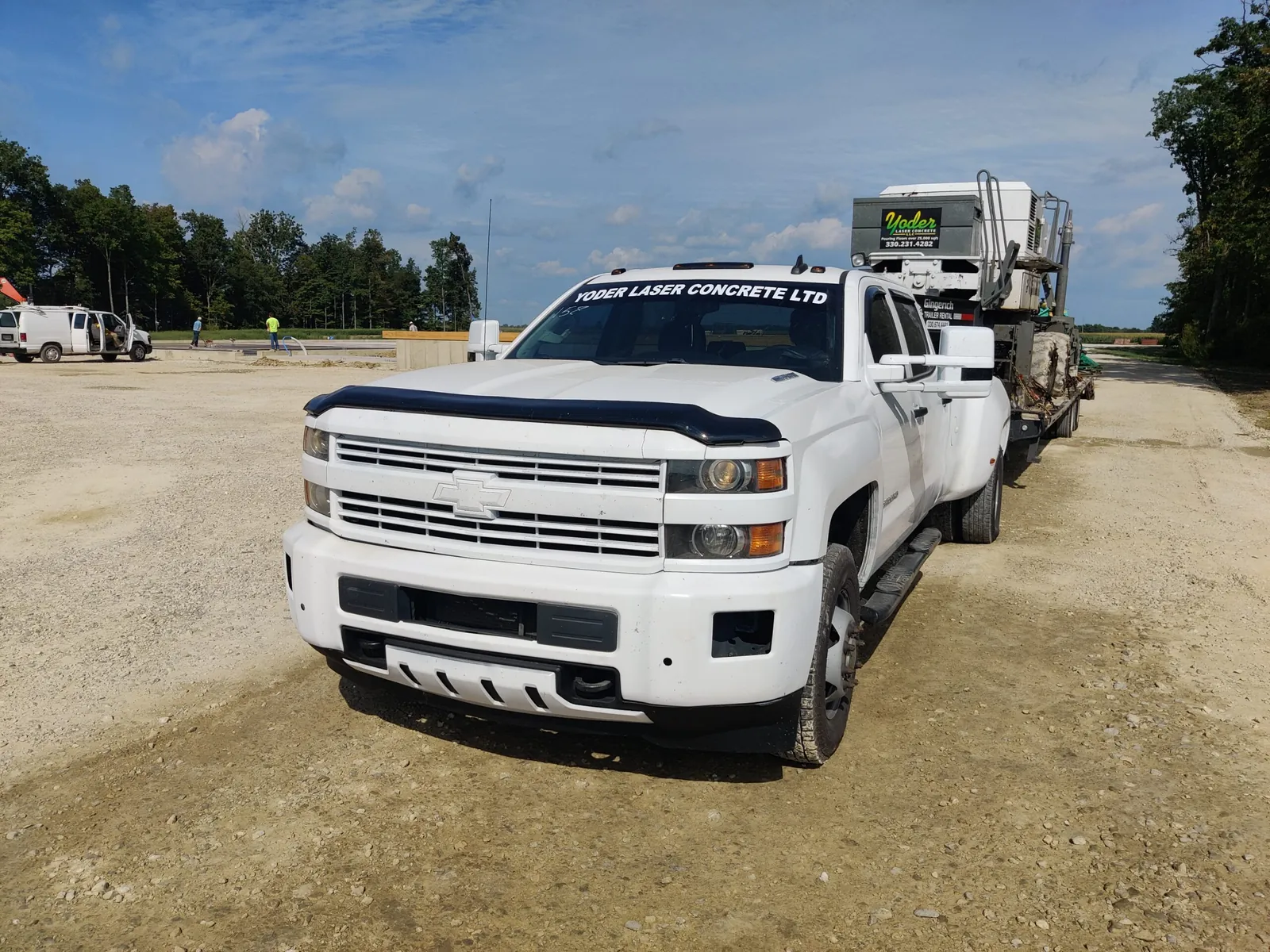
Yoder Laser Concrete self-performs about 90 percent of every job with our own crews and owned Somero laser screeds. Our EMR is 0.81, crew leaders hold OSHA 30, and we carry a $4 million umbrella policy. We have poured commercial concrete since 2000 across Ohio, Indiana, Michigan, West Virginia and Pennsylvania. See the projects we have poured or our commercial concrete services, and send your plans for a reply within 24 hours. OSHA explains its Outreach Training Program if you want to check what the 10 and 30 hour cards cover.