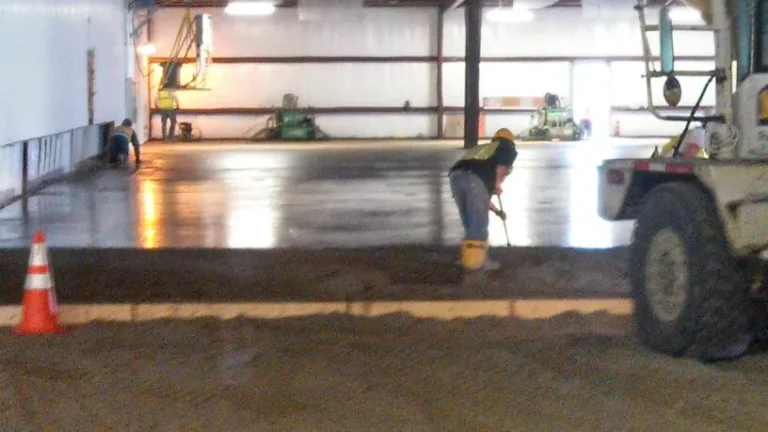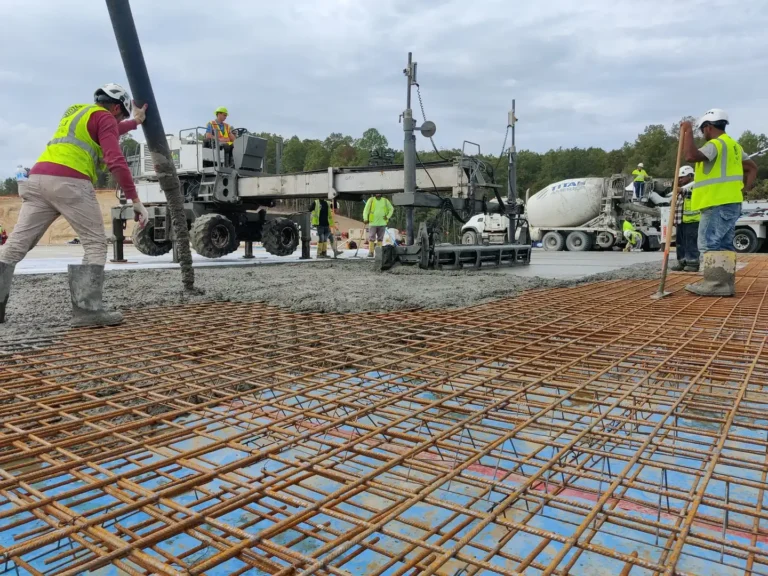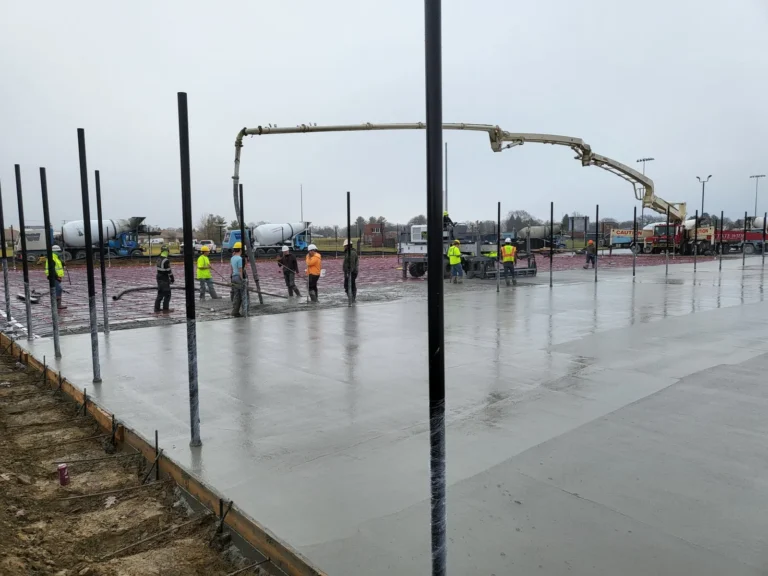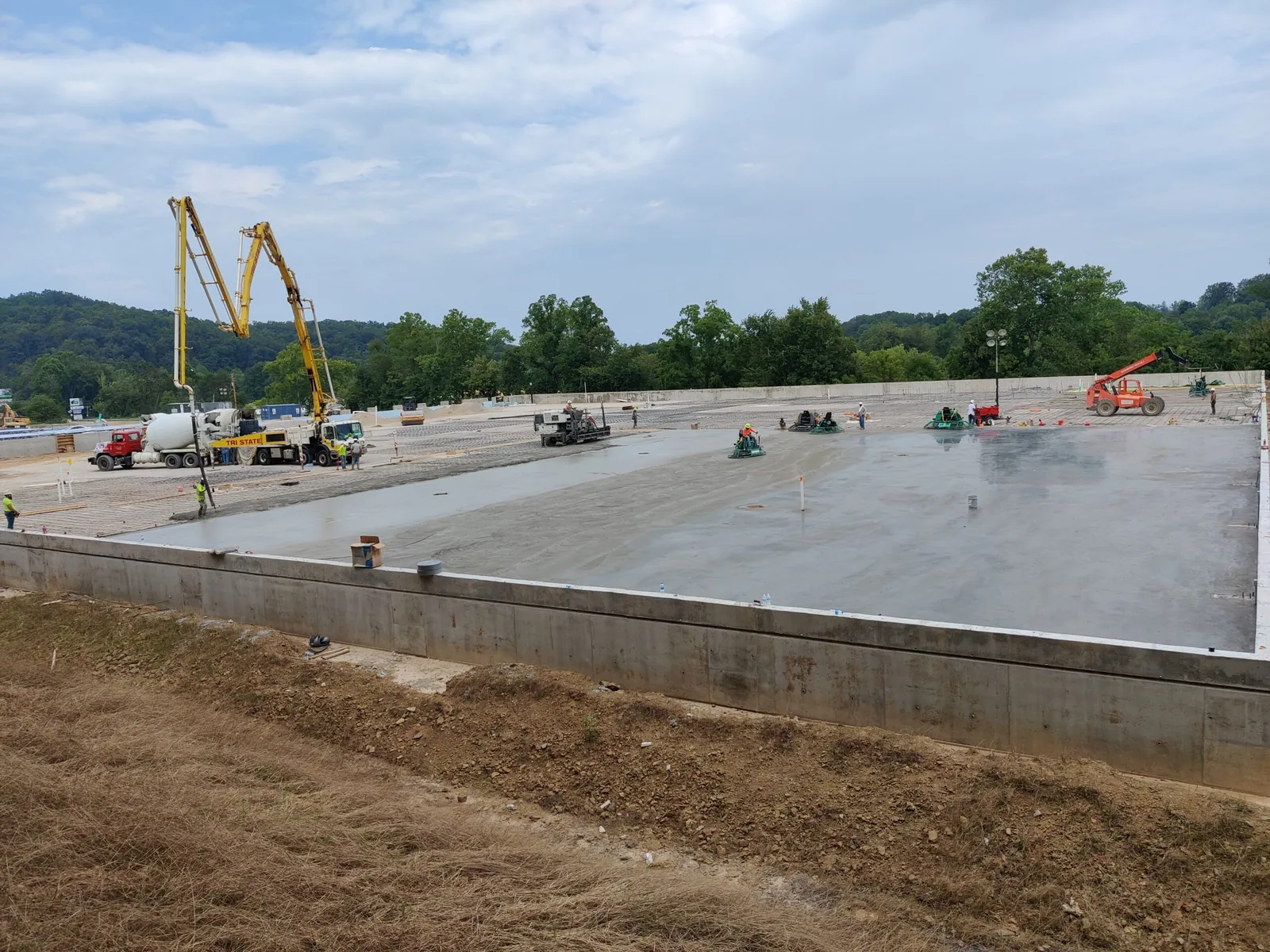
The best time to pour concrete is when air temperatures stay between about 50 and 70 degrees Fahrenheit through the day and the night after the pour, with no hard rain or strong wind in the forecast. In Ohio that usually means mid spring through early fall. Concrete can be placed outside that window, including in winter, but only with planned protection: the mix, the timing and the curing all change, and so does the cost.
Why temperature matters
Concrete hardens through a chemical reaction between cement and water, called hydration, and that reaction runs on heat. Warm concrete sets and gains strength quickly. Cold concrete sets slowly, and if the water in fresh concrete freezes before it has gained enough strength, the expanding ice damages the paste for good. Very hot concrete has the opposite problem: it sets too fast, dries out at the surface and cracks before it can be finished properly.
When is it too cold to pour concrete?
The American Concrete Institute treats it as cold weather concreting once air temperatures fall, or are expected to fall, below 40 degrees during the protection period. That is the point where precautions become necessary, not the point where work has to stop. The two rules that matter most:
- Never pour on frozen ground. Frozen subgrade settles when it thaws, and the slab cracks with it.
- Keep fresh concrete from freezing until it has gained enough strength to resist damage, about 500 psi, which normally takes a day or two when it is kept warm.
How crews pour in cold weather
- Warm materials. Heated water and aggregates keep the concrete warm as it is delivered.
- Adjusted mix. More cement or an accelerating admixture speeds up the set. Accelerators without chlorides are used where there is steel in the concrete.
- Thawed, covered subgrade. The ground is protected or heated before the pour.
- Blankets and enclosures. Insulated blankets, or a tented enclosure with heaters, hold the heat in after finishing. Fuel-fired heaters are vented to the outside, because their exhaust can damage the fresh surface.
- Longer curing. Protection stays in place longer, and forms stay on longer, because strength comes more slowly.
Hot weather has its own risks
Above about 90 degrees, especially with wind and low humidity, the surface can dry before the slab is finished. That causes plastic shrinkage cracks and a weak top layer. Crews respond by pouring early in the morning or at night, cooling the mix, using set-retarding admixtures, putting up windbreaks and starting the cure immediately.
Does concrete crack in winter?
Properly made concrete does not crack just because it is cold. Winter damage comes from a few specific causes:
- Freeze-thaw damage. Water in the pores of saturated concrete expands as it freezes. Air-entrained concrete, which contains tiny air bubbles for that water to move into, resists this. Exterior concrete in Ohio should always be air entrained.
- Deicing salt. Salt adds to freeze-thaw cycles at the surface and causes scaling, especially on concrete in its first winter.
- Frost heave. Water in soil under a slab or footing freezes and lifts it. Good drainage and footings below the frost line prevent this.
- Fresh concrete freezing. Concrete that freezes in its first day or two can lose much of its strength, which is why cold-weather protection matters.
Planning around Ohio’s seasons
Spring brings good temperatures but wet ground, so subgrade and drainage are the usual delays. Summer is the busiest season, with heat to manage on large pours. Fall often gives the best pouring weather of the year before the cold sets in. Winter work is possible with protection, and some projects need it to hold a building schedule. Our post on Ohio’s construction season covers how to plan bids and starts around it.
Planning a pour?
Tell us the scope and your target dates, and we will talk through the weather plan for your project. See our commercial concrete services, read how concrete curing affects the schedule, or send your plans for a reply within 24 hours. The American Concrete Institute publishes the cold and hot weather concreting guides referred to above.